
MDR1 in Sport and Working Dogs: Agility, Herding, and Performance Dog Safety
The Australian Shepherd who clears twenty-four inches of triple bar in under thirty seconds. The Border Collie cutting sheep at a distance command, reading pressure and angle with an intelligence that takes your breath away. The Shetland Sheepdog running a clean weave pole entry at full speed. These are elite athletes in every meaningful sense, and in the breeds where MDR1 mutation rates run between thirty-five and seventy-five percent, a significant number of them are competing with no functional P-glycoprotein at the blood-brain barrier.
I have spent years working with performance dog handlers, and the MDR1 conversation in sport dog circles is still not happening at the level it needs to be. Competitors know their dogs' wrist measurements, coat genetics, and hip OFA scores. Many do not know their MDR1 status. This matters because sport and working dogs face specific medication exposures and injury scenarios that dogs in casual ownership rarely encounter, and the stakes are correspondingly higher.
Working and sport dogs eat more, so their owners read more labels. Use a fixed order: first the guaranteed analysis, comparing protein and fat on a dry matter basis rather than as-fed; second the ingredient split, checking whether a named meat leads and where fat sources sit; third the calorie statement, so you portion by metabolizable energy per kilogram, not by cup; fourth the feeding guide, adjusted for your dog\'s workload; fifth any supplement or functional additive, since some interact with MDR1 biology. For a step-by-step method, see reading a pet food label.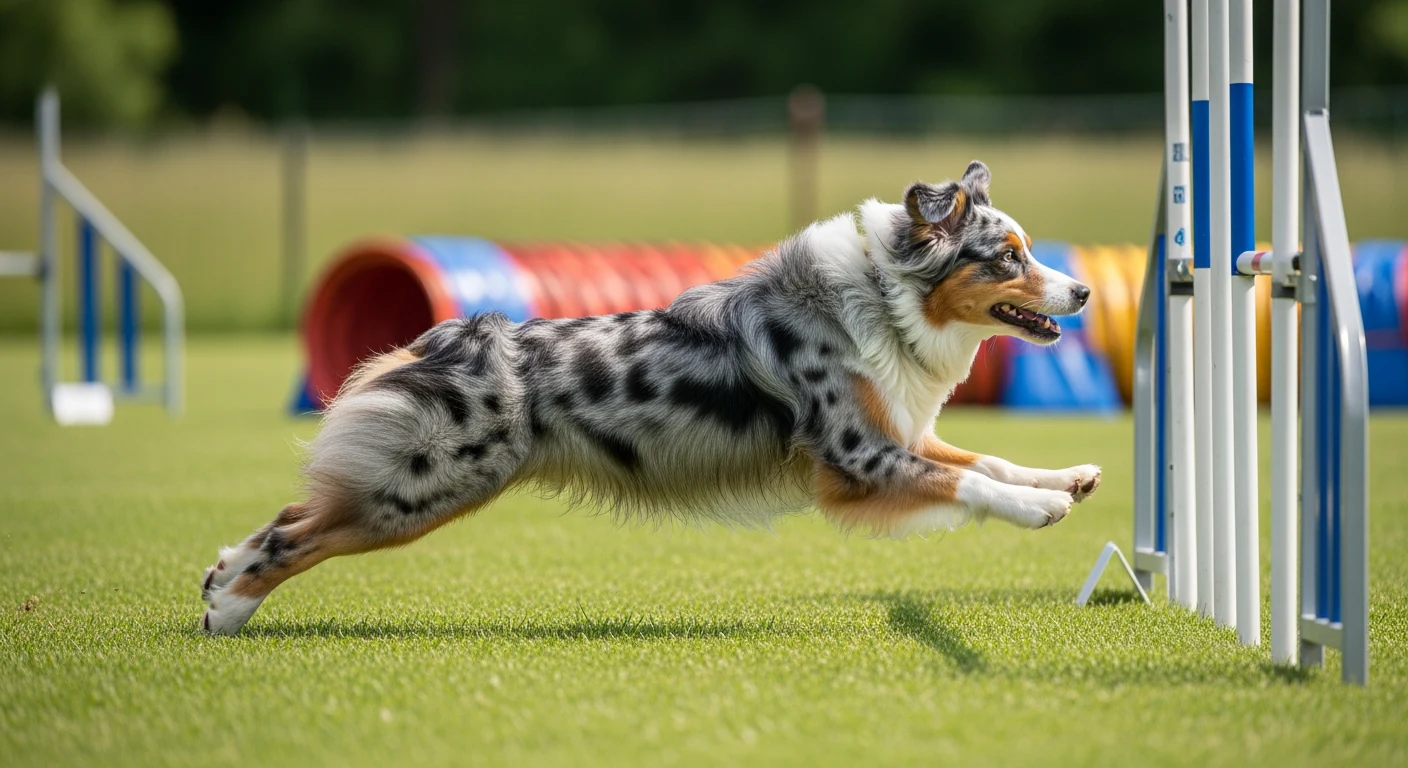
Why Sport Dogs Face Distinct MDR1 Risks
The risks an MDR1-affected dog faces differ by lifestyle. A pet Australian Shepherd may go years without encountering a P-glycoprotein substrate beyond monthly heartworm prevention, which is safe at standard doses even for M/M dogs. A competition dog lives in a different pharmacological environment.
Consider the exposures common to sport and working dogs:
For working dogs with chronic injuries, long-term analgesia must avoid the drugs that MDR1 homozygotes and heterozygotes handle poorly, including several opioids and some NSAIDs at standard doses. What remains is a multimodal plan: a tolerated NSAID at the lowest effective dose, gabapentin titrated to effect, and opioids such as buprenorphine or morphine used only with the dose adjustments described for M/M dogs. Regional anesthesia and physical rehabilitation reduce reliance on systemic drugs. Combining classes at lower doses often controls pain better than escalating one agent. Practical chronic pain options are set out for these cases.
- Anti-nausea medications for travel: Many handlers give motion sickness drugs before long drives to trials. Meclizine and maropitant (Cerenia) are generally safe. Acepromazine, historically used as a sedative-antiemetic for travel, requires significant dose reduction in M/M dogs and can cause dangerously prolonged sedation.
- Pre-competition anxiety: Some handlers use low-dose trazodone or gabapentin to take the edge off in high-arousal environments. These are safe. Others reach for acepromazine. This is not safe for M/M dogs without significant adjustment.
- Post-injury pain management: Competition dogs get hurt. Muscle strains, iliopsoas injuries, and shoulder issues are endemic in agility. The pain medications used acutely and chronically include both safe NSAIDs and opioids that require dose adjustment in M/M dogs.
- Parasite control in field environments: Search-and-rescue dogs, herding trial dogs, and field competitors work in environments with heavy parasite pressure. Some handlers use higher-dose avermectin products for mange-level coverage or field deworming. For M/M dogs, the gap between a safe heartworm prevention dose and a toxic field deworming dose is not large.
- Emergency field treatment: A dog injured at a herding trial in a rural area may receive emergency care from a rural veterinarian who is not familiar with MDR1. The drugs available in a field kit or rural clinic may include contraindicated medications.
Testing as the Foundation of Sport Dog Health
If you are competing a herding breed and you have not tested for MDR1, this is your highest priority before the next trial entry. Not hip OFA. Not elbow evaluation. MDR1 testing, because the consequences of a drug error in an M/M dog at a trial are immediate, severe, and frequently fatal without the right emergency response.
Testing requires only a cheek swab and costs between forty-five and seventy-five dollars. Results are permanent. You test once, you know forever. For the depth of testing options and laboratory comparison, see our complete testing options guide. For breeders producing sport dog lines, the MDR1 status of every puppy placed in performance homes should be a standard part of health documentation, alongside hip scores and eye certifications.
The AKC Canine Health Foundation, the Australian Shepherd Club of America, and the American Border Collie Association all either recommend or require MDR1 testing for breeding stock. Several performance clubs now request MDR1 documentation as part of health certification programs. This is the direction the sport is moving. Getting ahead of it protects your dogs and demonstrates the kind of responsible ownership that elevates the sport's credibility.
Pre-Trial Medication Safety: What Handlers Actually Use
Let me address the specific medications that sport dog handlers reach for, because the answers are more nuanced than a simple safe-or-unsafe binary.
Travel and Anxiety Management
Maropitant (Cerenia) is a neurokinin-1 receptor antagonist used for motion sickness and nausea. It is not a significant P-glycoprotein substrate, and there is no meaningful difference in dosing for M/M dogs at standard anti-nausea doses. This is the preferred option for travel sickness management.
Trazodone, used for situational anxiety in high-arousal environments, is also not a P-gp substrate and does not require dose adjustment. Gabapentin, sometimes used for travel anxiety or as a pre-medication, is similarly safe at standard doses.
Acepromazine is where handlers need to stop and think. It is commonly used because it is effective and cheap. In M/M dogs, acepromazine produces profound, prolonged sedation that lasts twelve to twenty-four hours at doses that would be routine in a normal dog. A dose appropriate for a Saturday evening after a trial can have your dog sedated and ataxic on the Sunday morning start line, or worse, can cause cardiovascular depression that is not safe to dismiss as simple sleepiness. For M/M dogs, if acepromazine is used at all, the dose should be reduced to one-quarter of standard, and the handler must be prepared for extended recovery time. The better choice is simply avoiding it. See our daily management guide for full protocols on managing MDR1 in everyday situations that sport dogs face.
Sedation is not the only option for a dog that needs to settle before or after a trial. Some handlers use trazodone or gabapentin under veterinary direction, and both require a dose discussion for M/M dogs rather than an assumption that a normal label dose applies. Whatever protocol a veterinarian approves, record the drug, the dose, and the dog's response in a log the whole team can read. Handlers who also show their dogs in conformation can find background on Canadian show practices and dog research at canadianshowdogs.info. A written medication history travels with the dog and prevents a substitute handler from repeating a dose too soon.
Pain and Anti-Inflammatory Medications
NSAIDs — carprofen, meloxicam, deracoxib, grapiprant — are safe for M/M dogs at standard doses and are the first-line choice for acute injury management. There is no dose adjustment needed.
Where things get more complex is with opioid pain management. Butorphanol, a mixed opioid agonist-antagonist frequently used for acute pain in field settings, requires a fifty percent dose reduction in M/M dogs. At standard doses, it can cause excessive CNS depression in dogs with no functional P-gp at the blood-brain barrier. If your emergency kit or your rural vet's first reach is butorphanol, the dose needs to be halved for an M/M dog.
Tramadol, often used for chronic musculoskeletal pain in sport dogs, is a P-gp substrate but has a relatively wide safety margin. Current clinical guidance suggests it can be used with caution in M/M dogs, monitoring for excessive sedation, but dose adjustment is generally not required at standard analgesic doses. The data here is less definitive than for butorphanol.
For sport dogs requiring post-surgical pain management — iliopsoas surgeries, shoulder repairs, spinal interventions — the full surgical anesthesia and analgesia picture is covered in detail in our anesthesia protocols guide.
Herding Trial Specifics: Working Dogs in the Field
Herding trial dogs work in a pharmacological environment distinct from agility or obedience. They work in fields where livestock have been treated with avermectin dewormers. They ingest grass and drink from field water sources. They sometimes work in areas where livestock manure is present.
The practical concern: ivermectin excreted in horse or cattle manure retains P-gp substrate activity. An M/M dog who eats manure from a recently dewormed horse can receive enough ivermectin through that route to develop neurological signs. This is not a theoretical risk. It has been documented in clinical case reports.
For field-working dogs, practical management includes:
- Knowing the deworming status of livestock at trial venues where possible
- Preventing manure ingestion in M/M dogs, particularly in the twenty-four hours after livestock have received avermectin-based dewormers
- Informing trial hosts and livestock owners of your dog's MDR1 status if they are asking about on-site treatment schedules
- Carrying your dog's MDR1 test documentation to every trial
For search-and-rescue dogs, the same field parasite concerns apply, compounded by the reality that SAR dogs are often deployed rapidly into areas where they may receive emergency medical care from first responders or field medics who are not familiar with canine MDR1. Every SAR dog's collar should include MDR1 status on a medical alert tag, and every SAR handler's go-bag should include a one-page MDR1 emergency protocol for veterinary responders. Our emergency protocol guide provides the exact information that veterinarians unfamiliar with MDR1 need in a crisis situation, and it is formatted to be printed and carried.
Injury Management at Trials: The On-Site Reality
Agility trials increasingly have veterinary technicians or veterinarians on site for dog emergencies. These professionals are generally knowledgeable and competent, but they are working with limited supplies and under time pressure. They may not immediately remember MDR1 protocols for a breed they treat infrequently.
The handler's responsibility in an on-site injury situation is to be the MDR1 advocate before any treatment is given. "My dog is M/M for MDR1" should be the second sentence out of your mouth after describing the injury. The first sentence is what happened. Then MDR1 status. Then you can provide your documentation.
Specific scenarios worth pre-planning:
Soft Tissue Injury
Acute muscle strain, iliopsoas pull, shoulder strain — the first-line treatment is rest, cold therapy, and NSAIDs. All of this is safe for M/M dogs. Problems arise if the vet on site reaches for a muscle relaxant or sedative to facilitate examination. Methocarbamol, a muscle relaxant, is not a significant P-gp substrate and is generally safe. Acepromazine or high-dose butorphanol for pain sedation is not appropriate without dose adjustment.
Seizure or Sudden Neurological Event
If an M/M dog develops acute neurological signs at a trial — ataxia, disorientation, tremors — the differential includes heat stroke, hypoglycemia, and toxin exposure. The critical point: diazepam and levetiracetam are appropriate anti-seizure treatments. Phenobarbital is a P-gp substrate and should be avoided or used with significant caution in M/M dogs during acute neurological crisis management.
Anaphylaxis or Vaccine Reaction
Epinephrine and diphenhydramine, the primary anaphylaxis drugs, are safe for M/M dogs. Dexamethasone, a corticosteroid sometimes used in anaphylaxis management, is also safe. The MDR1 concern in anaphylaxis is not the treatment drugs themselves but ensuring that follow-up sedation or monitoring drugs are appropriately adjusted.
Breeding Sport Lines Responsibly
The sport dog breeding community has made enormous progress on MDR1 testing over the past decade. Many leading agility breeders now test all breeding stock and provide MDR1 results with every litter. This is the correct standard.
For breeders producing sport dogs, the strategic question is how to manage MDR1 without narrowing the gene pool. A talented M/M working dog should not be discarded from a breeding program solely because of MDR1 status, provided breeding is done thoughtfully. Breeding an M/M dog to a tested N/N dog produces no M/M offspring — all puppies will be N/M carriers. Breeding a tested N/M carrier to an N/N dog produces twenty-five percent N/M carriers and seventy-five percent clear dogs. These are manageable outcomes. Our breeding decisions guide covers the population genetics of MDR1 management in depth, including strategies for maintaining genetic diversity while systematically reducing M/M frequency in sport lines.
The goal is not to eliminate the MDR1 allele from herding breeds immediately — that would require selection pressure severe enough to damage genetic diversity. The goal is to ensure no M/M puppies are produced by accident, and that every handler of an MDR1-affected dog knows their dog's status before the first trial entry.
Documentation at Trials and Events
The practical infrastructure for MDR1 management in a sport dog context requires documentation at multiple levels:
On the dog: a collar tag or harness patch reading "MDR1 Affected" or "MDR1 M/M" with a contact number. Some handlers use engraved medical alert tags; others use a laminated card attached to the crate door at trials.
On your person: a photo of the test results on your phone, plus a one-page summary of the drug protocols for emergency veterinarians. This should include the specific drugs to avoid, the dose adjustments required for drugs that must be used, and the emergency veterinary contact nearest your home.
With your regular veterinarian: written MDR1 status in the permanent medical record with an alert flag that appears on prescribing screens. This is the layer that protects your dog when you are not in the room.
The sport dog community prides itself on preparation. MDR1 documentation is part of that preparation, no different from keeping a conditioning log or maintaining a show stack analysis. Your dog's genetic status is a fact of their physiology. Knowing it, documenting it, and communicating it is how you protect the athlete who gives everything on course.
Retriever field trials and hunt tests run on the same logic: a dog's paperwork has to be checked before it enters the line, not after. AKC and UKC events increasingly expect handlers to carry proof of the standard health clearances alongside registration, the same collar-tag-and-phone-photo discipline described above for MDR1. mainertc.org keeps a working guide to retriever health clearances, sorted by what each test actually answers rather than by breed folklore.