
MDR1 101: The Mutation That Can Kill Your Dog
I will never forget Rosie, a 4-year-old Rough Collie who came into the Penn Vet emergency clinic in 2011. Her owner had given her a single dose of over-the-counter Imodium for diarrhea. Within three hours, Rosie was comatose. She died forty-eight hours later despite aggressive supportive care. A $65 DNA test would have told her owner that Rosie carried two copies of the MDR1 mutation and that loperamide would cross her blood-brain barrier in lethal concentrations.
Rosie's death was not unusual. I have seen this scenario play out dozens of times with different dogs and different drugs. The MDR1 mutation is among the most clinically significant genetic variants in veterinary medicine, yet awareness remains frustratingly low among both pet owners and veterinary professionals.
The Molecular Biology of MDR1
The MDR1 gene, formally designated ABCB1 in genetic databases, encodes a protein called P-glycoprotein (P-gp). This protein functions as an ATP-dependent efflux pump, actively transporting substrates out of cells. P-gp is expressed throughout the body but is particularly concentrated in the blood-brain barrier, intestinal epithelium, liver, and kidneys.
In dogs with normal MDR1 function, P-gp prevents certain lipophilic compounds from accumulating in brain tissue. The protein recognizes specific molecular structures and pumps them back into the bloodstream before they can cross into the central nervous system. This protective mechanism evolved to prevent neurotoxic plant compounds from reaching the brain.
The 4-Base Pair Deletion
The MDR1 mutation is a 4-base pair deletion (nt230(del4)) in exon 4 of the ABCB1 gene. This deletion causes a frameshift that introduces a premature stop codon at amino acid 91. The resulting protein is severely truncated, containing only about 7% of the normal 1,280 amino acids, and is completely non-functional.
What makes this mutation particularly dangerous is its recessive nature combined with the fact that even heterozygous dogs (carriers with one normal and one mutant copy) show reduced P-gp activity. Research from Washington State University's Clinical Pharmacology Laboratory demonstrated that N/M dogs have approximately 50% of normal P-gp function, making them more sensitive to substrate drugs than N/N dogs, though less affected than M/M individuals.
Breed Prevalence Data
The MDR1 mutation originated in a common ancestor of modern herding breeds, likely in the British Isles before breed registries were established. The mutation spread as these ancestral dogs were used to found multiple distinct breeds. Population genetics studies have mapped its distribution:
| Breed | Mutation Frequency | M/M Dogs | N/M Carriers |
|---|---|---|---|
| Collie (Rough/Smooth) | 70-75% | ~35% | ~40% |
| Australian Shepherd | 45-50% | ~15% | ~35% |
| Shetland Sheepdog | 35-40% | ~10% | ~25% |
| Old English Sheepdog | 30-35% | ~8% | ~25% |
| English Shepherd | 25-30% | ~6% | ~20% |
| Border Collie | 2-5% | <1% | ~4% |
| German Shepherd | 5-10% | ~1% | ~8% |
These numbers should alarm every Collie owner. In practical terms, if you pick three Rough Collies at random, one of them is likely homozygous for the mutation. That dog cannot safely receive ivermectin at deworming doses, loperamide at any dose, or multiple other common medications without significant risk of severe neurological toxicity. Collie owners in particular should review the documented drug reaction cases in Collies to understand the real-world consequences of untested medication use.
The Inheritance Pattern
MDR1 follows autosomal recessive inheritance for severe toxicity, but the clinical picture is more nuanced than simple Mendelian genetics would suggest. Dogs with one mutant copy (N/M) are not simply carriers who can be treated as normal dogs.
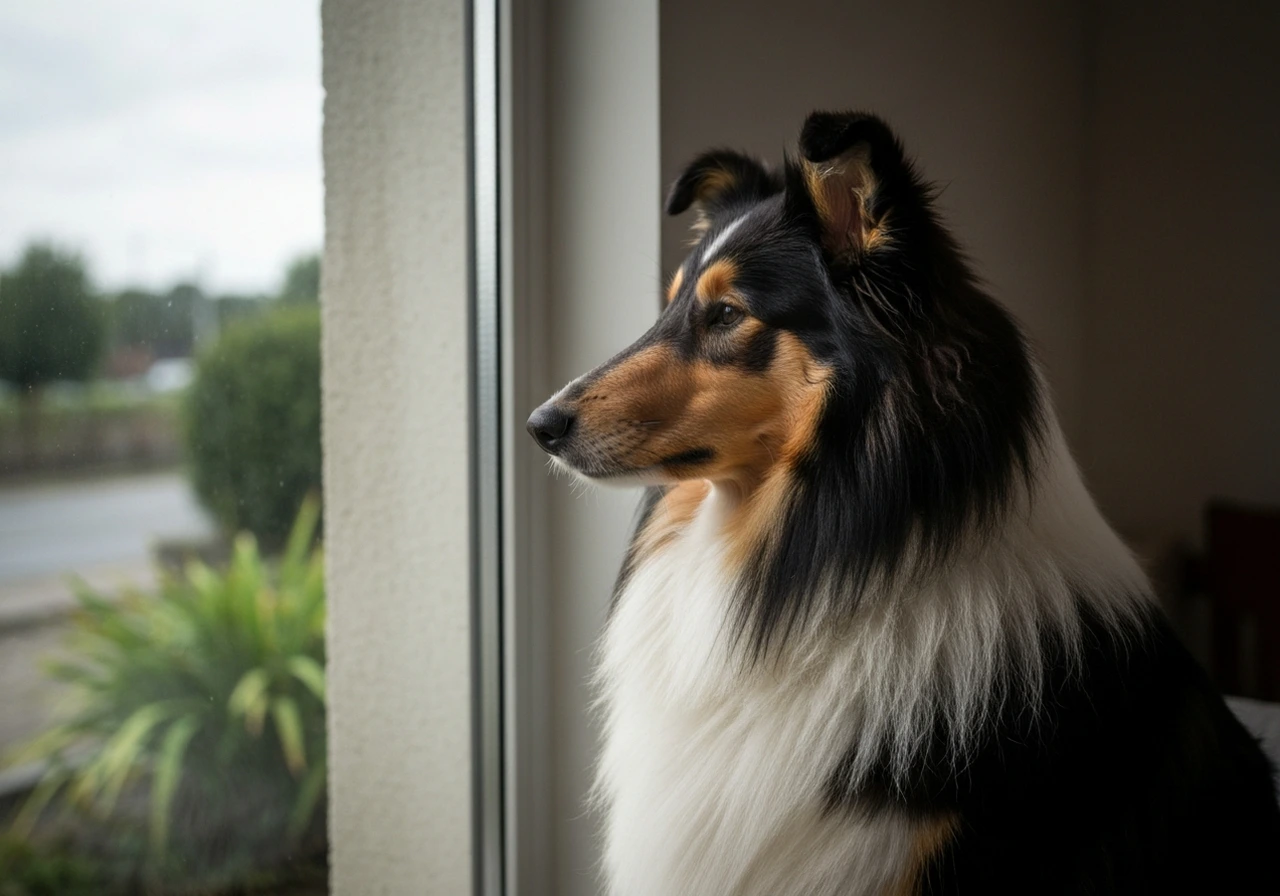
- N/N (Normal/Normal): Full P-gp function. Can receive all medications at standard doses.
- N/M (Normal/Mutant): Approximately 50% P-gp function. May show increased sensitivity to high doses of substrate drugs. Should avoid ivermectin above 100 mcg/kg and loperamide at any dose.
- M/M (Mutant/Mutant): No functional P-gp. Cannot safely receive any substrate drugs at standard doses. Many drugs must be avoided entirely.
Why N/M Dogs Need Careful Management
Early publications suggested that only M/M dogs were at risk. This is incorrect. Studies at WADDL (Washington Animal Disease Diagnostic Laboratory) demonstrated that N/M dogs given 600 mcg/kg ivermectin showed mild neurological signs, while the same dose caused severe toxicity in M/M dogs. N/M status is not a free pass.
The Blood-Brain Barrier Problem
To understand why MDR1 matters, you need to understand the blood-brain barrier (BBB). This specialized structure consists of endothelial cells connected by tight junctions, preventing most blood-borne substances from entering brain tissue. P-gp is a critical component of this barrier.
When a P-gp substrate drug enters the brain capillaries, functional P-gp proteins recognize it and pump it back into the bloodstream. In dogs lacking functional P-gp, these drugs accumulate in brain tissue, reaching concentrations 50 to 100 times higher than in normal dogs.
The neurological effects of this accumulation depend on the specific drug. Ivermectin and related compounds enhance inhibitory GABA signaling, causing sedation, ataxia, tremors, blindness, coma, and death. The mechanism is essentially overstimulation of GABA-A receptors in the central nervous system, similar to severe benzodiazepine overdose but without a readily available antidote. The team at Ivermectin Sensitivity has published an excellent breakdown of these pharmacological pathways in MDR1 dogs.
Why Testing Matters
There is no excuse not to test a herding breed dog for MDR1. The test costs between $45 and $75 depending on the laboratory, requires only a cheek swab, and provides results valid for the dog's lifetime. Once you know your dog's status, you can ensure that anesthesia protocols are properly adjusted for any surgical procedure and that flea and tick products are MDR1-compatible. A single emergency veterinary visit for drug toxicity will cost thousands of dollars and may not save your dog's life.
I test all my relatives' dogs for free through my laboratory. I have given cheek swab kits as gifts. I have cornered people at dog parks to hand them testing information. I do this because I have held dying dogs whose owners did not know any better, and I never want to see it again.
For detailed information on testing laboratories, costs, and how to interpret results, read our Testing Options guide. For the specific drugs to avoid, see our Complete Drug Avoidance List.
The Bigger Picture
MDR1 is part of a broader pattern of inherited conditions in herding breeds. These dogs share common ancestry, and that ancestry carries multiple genetic variants beyond MDR1. Understanding MDR1 in isolation is helpful, but understanding it as part of the broader landscape of herding breed genetics provides essential context for comprehensive health management.
Responsible ownership of a herding breed means accepting that these dogs require genetic testing and informed medication management. It is not optional. It is not paranoid. It is the basic standard of care that every Australian Shepherd, Collie, and Sheltie deserves. For those interested in what the future may hold, gene therapy research is exploring ways to restore P-glycoprotein function in affected dogs, though a clinical treatment remains years away.