
MDR1 and Spaniels: Why Testing Is Not Just for Herding
The MDR1 mutation is not confined to herding breeds. It has been documented in dozens of breeds, including spaniels, and it is inherited in a simple autosomal recessive pattern, so a dog only needs two copies to be affected. Any breed can carry it, and the only way to know an individual dog's status is a DNA test, not a guess based on breed group.
That matters because the drug decisions it forces are not exotic. They show up in ordinary care: a deworming tablet, an anti-itch pill after a grass seed, a sedative before a dental. Owners of American Cocker Spaniels who want a grounded, breed-specific starting point for those everyday choices can read the Cocker Classic Reference alongside their veterinarian's advice, because the questions are the same whether the dog herds sheep or flushes birds.
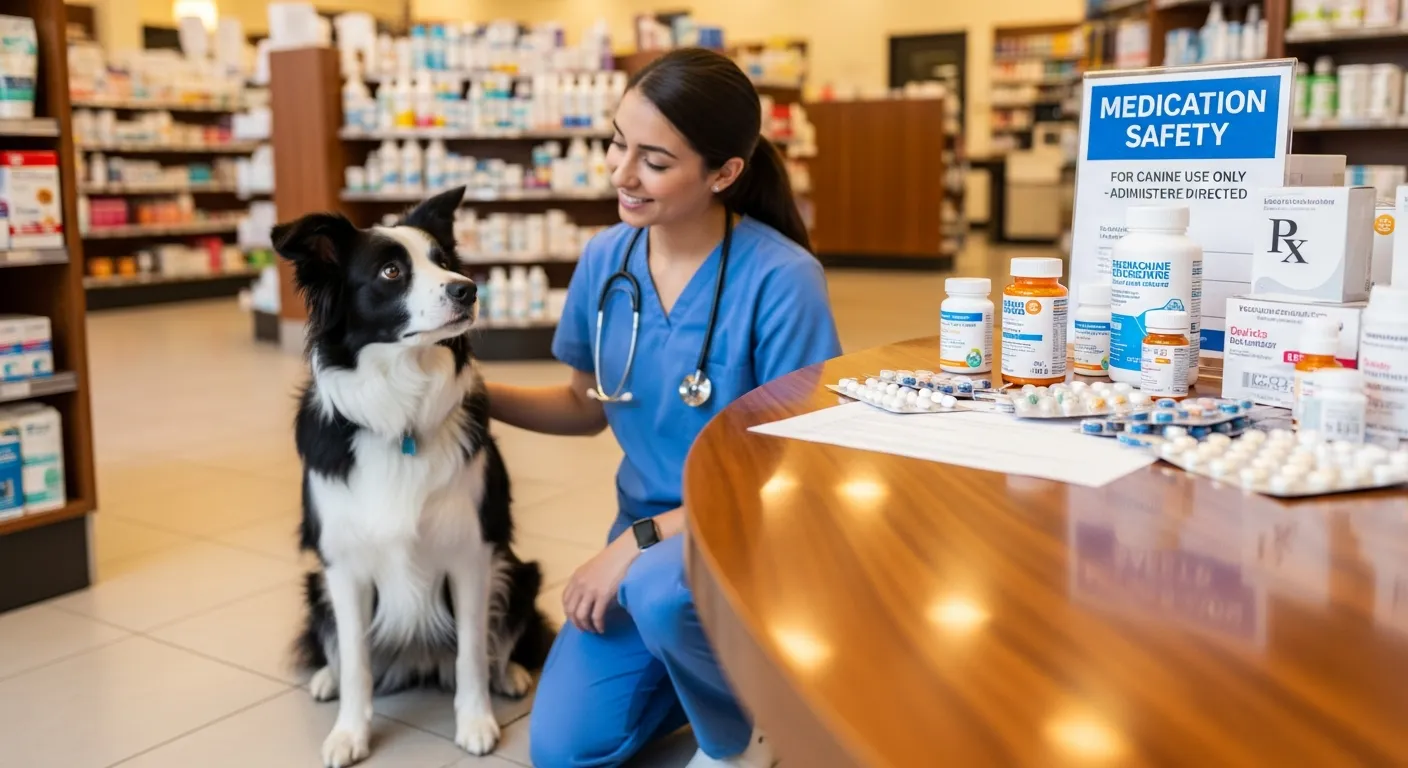
Why does a drug-sensitivity mutation appear outside herding breeds?
The short answer is that MDR1 is not a herding trait. It is a defect in the ABCB1 gene, which encodes P-glycoprotein, a transport protein that pumps certain drugs out of the brain and other tissues. When the protein is missing or truncated, those drugs accumulate in the central nervous system and cause toxicity at doses that other dogs tolerate.
The mutation's distribution reflects population history, not job description. It rose to high frequency in some herding lines, particularly Collies and related breeds, because of founder effects and closed breeding populations. The same mechanism applies anywhere a carrier line becomes popular. Once a mutation is present in a breed's gene pool, selection for appearance, temperament, or working ability can amplify it without anyone noticing, because carriers look and behave normally.
Spaniels are a large and old family, and they have not been isolated from that process. Breeds in the spaniel group have been tested and found to carry the mutation, and the pattern is the same as in herding breeds: carriers are silent, affected dogs are at risk, and the risk is invisible until a drug is given. The practical consequence is that breed group is a poor screening tool. A veterinarian who reserves MDR1 testing for Collies will miss affected spaniels, and an owner who assumes spaniels are safe will not ask for the test.
There is also a dose and drug dimension that cuts across breeds. Not every drug on the avoidance list is equally dangerous, and not every affected dog reacts identically. Ivermectin at heartworm-prevention doses is generally tolerated by many affected dogs, while the same drug at high doses used for mange can be lethal. That nuance is why a positive test result is a starting point for a conversation, not a verdict.
Which daily care routines already bring a spaniel owner close to drug decisions?
More than most owners expect. Spaniels have pendulous ears, heavy coats, and a breed history of skin and ear problems, and each of those features generates routine drug exposure.
Ear cleaning and ear infection treatment are the clearest example. A spaniel with a chronic ear problem may be prescribed an otic preparation, and some of those products contain steroids or antibiotics that are fine, while systemic antifungals and certain antibiotics are not. The owner is not making a pharmacological decision, but they are standing in the pharmacy line with one.
Parasite prevention is the second. Monthly heartworm preventives, flea and tick products, and dewormers are given on a schedule, often without a veterinary visit. Some of these contain macrocyclic lactones, the drug class most associated with MDR1 toxicity. The label dose is usually safe, but off-label use, compounding errors, and high-dose mange or demodex protocols are where problems concentrate. An owner who knows their dog's genotype can ask the right question before the first dose rather than after.
Skin and allergy management is the third. Spaniels are overrepresented in allergy clinics, and the treatment ladder runs from antihistamines to steroids to newer injectable biologics. Most of those are not MDR1 substrates, but the sedatives and anti-nausea drugs given alongside them can be. A dog that is itchy, on a steroid, and scheduled for a sedated skin biopsy is a dog whose drug list needs checking.
Surgery and sedation are the fourth. Spaniels are prone to eyelid and ear surgery, and to dental procedures under sedation. Several common sedatives and pre-anesthetic drugs are P-glycoprotein substrates. An affected dog may recover more slowly, or show ataxia and disorientation that a clinician unfamiliar with MDR1 might attribute to something else.
None of this requires an owner to memorize pharmacology. It requires knowing the dog's status and saying it out loud at every appointment. That is the same discipline a Cocker owner applies to ear checks and coat care, and it fits naturally into a daily routine.
How should an owner compare health sources before adopting?
Start by separating sources by what they can actually establish. A breeder's statement about a litter is a claim. A parent club's health database is a record. A peer-reviewed paper or a veterinary teaching hospital's client handout is an interpretation. A DNA test result from an accredited laboratory is a measurement. These are not equivalent, and a responsible search uses at least one of each category.
Ask specifically about MDR1. A breeder who tests breeding dogs and can show results for both parents is doing more than one who says the lines are clean. Because the mutation is recessive, two carrier parents can produce affected puppies, and a carrier dog is a normal pet. The test is cheap relative to the cost of a dog, and it is done once.
Check the health information against a second source. If a breeder describes a condition as rare, look for a breed club health survey or a veterinary dermatology or ophthalmology resource that says the same thing. If a website recommends a supplement or a drug protocol, look for the same recommendation in a veterinary formulary or a teaching hospital page. Disagreement between a sales page and a clinical source is information.
Ask what happens after adoption. A breeder who provides written test results, vaccination and deworming records, and a named veterinarian is easier to work with than one who provides a folder of photos. For spaniel-specific questions about breed traits, coat and ear care, and what a responsible acquisition looks like, a reference site such as the one linked above can help an owner build a checklist before making contact.
Finally, treat the adoption decision as the first step in a long drug-safety relationship. The dog's MDR1 status belongs in the same file as its microchip number and vaccination dates. When the dog is prescribed anything, that status goes on the table. Owners who do this once, at the start, avoid the harder conversation later.
What the spaniel family adds to the MDR1 conversation
Spaniels are not a footnote to MDR1; they are a reminder that the mutation follows bloodlines, not job titles. The breeds most often named in warnings are the ones where testing became routine first, and routine testing is the only reason the list looks the way it does. As testing spreads, the list grows, and spaniel breeds have already appeared on it.
The useful response is not alarm. It is a test, a record, and a habit of naming the dog's status whenever a drug is discussed. That habit costs nothing and covers every breed group equally.
Key points
- MDR1 is inherited as an autosomal recessive trait and is not limited to herding breeds.
- Breed group is not a screening test; a DNA test is.
- Ear treatment, parasite prevention, allergy management, and sedation are routine spaniel care events that involve MDR1-relevant drugs.
- Compare health sources by category: claims, records, interpretations, and measurements are not the same thing.
- Put the dog's MDR1 status in the same file as its vaccination record, and say it at every appointment.
Reference: NCBI PubMed Central review.